A) 4.0
B) 0.91
C) 3.6
D) 16
E) 0.063
G) B) and E)
Correct Answer

verified
Correct Answer
verified
A) 1.7 atm
B) 0.0042 atm
C) 0.30 atm
D) 0.064 atm
E) 0.087 atm
G) B) and C)
Correct Answer
verified
Correct Answer
verified
A) The reaction will shift to the left in the direction of reactants.
B) The equilibrium constant will increase.
C) No effect will be observed.
D) The reaction will shift to the right in the direction of products.
E) The equilibrium constant will decrease.
G) A) and E)
Correct Answer
verified
Correct Answer
verified
A) 3.5
B) 0.28
C) 9.1
D) 0.11
E) 0.78
G) A) and D)
Correct Answer
verified
Correct Answer
verified
A) K = 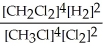
B) K = 
C) K = 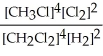
D) K = 
E) K = 
G) A) and B)
Correct Answer
verified
Correct Answer
verified
A) 2.1 × 10⁻²
B) 29
C) 47
D) 3.4 × 10⁻²
E) 8.7 × 10⁻²
G) D) and E)
Correct Answer
verified
Correct Answer
verified
Correct Answer
verified
Each concentration or pressure for a rea...View Answer
Correct Answer
verified
View Answer
A) 3.4 × 10²
B) 8.5
C) 1.3 × 10³
D) 1.2 × 10⁻⁶
E) 7.7 × 10⁻⁴
G) D) and E)
Correct Answer
verified
Correct Answer
verified
A) 1.8
B) 44
C) 2.3 × 10²
D) 2.3 × 10⁻²
E) 0.53
G) All of the above
Correct Answer
verified
Correct Answer
verified
A) K = ![Express the equilibrium constant for the following reaction. 2 P<sub>4</sub>(s) + 10 O<sub>2</sub>(g) ⇌ 2 P<sub>4</sub>O<sub>10</sub>(s) A) K = B) K = C) K = D) K = [O<sub>2</sub>]<sup>10</sup> E) K =](https://d2lvgg3v3hfg70.cloudfront.net/TB6107/11ea888e_e2d9_cebe_a96f_cf2321ba43a3_TB6107_11.jpg)
B) K = ![Express the equilibrium constant for the following reaction. 2 P<sub>4</sub>(s) + 10 O<sub>2</sub>(g) ⇌ 2 P<sub>4</sub>O<sub>10</sub>(s) A) K = B) K = C) K = D) K = [O<sub>2</sub>]<sup>10</sup> E) K =](https://d2lvgg3v3hfg70.cloudfront.net/TB6107/11ea888e_e2d9_cebf_a96f_2595bfeb76f9_TB6107_11.jpg)
C) K = ![Express the equilibrium constant for the following reaction. 2 P<sub>4</sub>(s) + 10 O<sub>2</sub>(g) ⇌ 2 P<sub>4</sub>O<sub>10</sub>(s) A) K = B) K = C) K = D) K = [O<sub>2</sub>]<sup>10</sup> E) K =](https://d2lvgg3v3hfg70.cloudfront.net/TB6107/11ea888e_e2d9_cec0_a96f_21d2f4a891b6_TB6107_11.jpg)
D) K = [O2]10
E) K = ![Express the equilibrium constant for the following reaction. 2 P<sub>4</sub>(s) + 10 O<sub>2</sub>(g) ⇌ 2 P<sub>4</sub>O<sub>10</sub>(s) A) K = B) K = C) K = D) K = [O<sub>2</sub>]<sup>10</sup> E) K =](https://d2lvgg3v3hfg70.cloudfront.net/TB6107/11ea888e_e2d9_cec1_a96f_c74bdc3256cb_TB6107_11.jpg)
G) A) and D)
Correct Answer
verified
Correct Answer
verified
A) Reaction quotient is the concentration of the products raised to the stoichiometric coefficients divided by the concentration of the reactants raised to their stoichiometric coefficients, measured at any point in the reaction.
B) Reaction quotient is the concentration of the reactants raised to the stoichiometric coefficients divided by the concentration of the products raised to their stoichiometric coefficients, measured at any point in the reaction.
C) Reaction quotient is the concentration of the products raised to the stoichiometric coefficients divided by the concentration of the reactants raised to their stoichiometric coefficients, measured at equilibrium.
D) Reaction quotient is the concentration of the reactants raised to the stoichiometric coefficients divided by the concentration of the products raised to their stoichiometric coefficients, measured at equilibrium.
E) Reaction quotient is the concentration of the products raised to the stoichiometric coefficients divided by the concentration of the reactants raised to their stoichiometric coefficients, at the point both are equal.
G) None of the above
Correct Answer
verified
Correct Answer
verified
A) P(cis-2-butene) = 0.0426 atm and P(trans-2-butene) = 0.145 atm
B) P(cis-2-butene) = 0.0471 atm and P(trans-2-butene) = 0.160 atm
C) P(cis-2-butene) = 0.0735 atm and P(trans-2-butene) = 0.250 atm
D) P(cis-2-butene) = 0.0898 atm and P(trans-2-butene) = 0.305 atm
F) B) and D)
Correct Answer
verified
Correct Answer
verified
A) The reaction will shift to the right in the direction of products.
B) No effect will be observed.
C) The reaction will shift to the left in the direction of reactants.
D) The equilibrium constant will decrease.
E) The equilibrium constant will increase.
G) C) and D)
Correct Answer
verified
Correct Answer
verified
Correct Answer
verified
Le Chatelier's Principle state...View Answer
Correct Answer
verified
View Answer
A) 3.8 × 10⁻²
B) 4.4 × 10⁴
C) 26
D) 2.3 × 10⁻⁵
E) 41
G) D) and E)
Correct Answer
verified
Correct Answer
verified
A) [C6H12] = 0.041 M, [CH3C5H9] = 0.041 M
B) [C6H12] = 0.159 M, [CH3C5H9] = 0.116 M
C) [C6H12] = 0.241 M, [CH3C5H9] = 0.034 M
D) [C6H12] = 0.253 M, [CH3C5H9] = 0.022 M
F) C) and D)
Correct Answer
verified
Correct Answer
verified
A) 1.46
B) 0.322
C) 3.11
D) 1.13
E) 5.40
G) A) and C)
Correct Answer
verified
Correct Answer
verified
Correct Answer
verified
In this reaction,dynamic equilibrium mea...View Answer
Correct Answer
verified
View Answer
A) The reaction will shift to the left in the direction of reactants.
B) The equilibrium constant will decrease.
C) The equilibrium constant will increase.
D) The reaction will shift to the right in the direction of products.
E) No effect will be observed.
G) B) and D)
Correct Answer
verified
Correct Answer
verified
A) 7.1 × 10⁻⁷ M
B) 8.4 × 10⁻⁴ M
C) 1.4 × 10⁻² M
D) 1.2 × 10⁻¹ M
F) C) and D)
Correct Answer
verified
Correct Answer
verified
Showing 41 - 60 of 141
Related Exams